“If you let cloudy water settle, it will become clear. If you let your upset mind settle, your course will also
become clear”- Jack Korneld, Buddha’s Little Instruction Book (1994)
What Is Mindfulness?
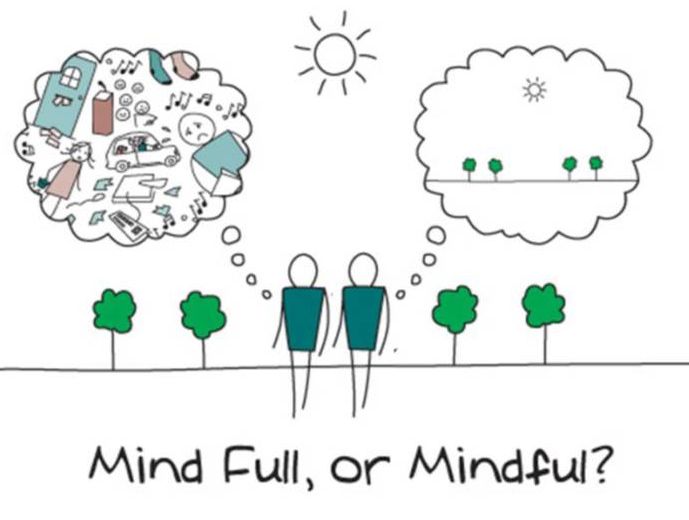 Which person are you?
Minndfulness is the short term for mindfulness meditation practice. This is a form of self-awareness training adapted from Buddhist mindfulness meditation.
Mindfulness is about being aware of what is
happening in the present, moment-by-moment, without making judgements about what we notice; including our racing thoughts, what we should be doing, thoughts of it we are doing mindfulness 'right', and our every ending to-do lists.
Mindfulness meditation practice is a key ingredient in a variety of of evidence-based psychotherapies, including dialectical behavior therapy (DBT) and acceptance and commitment therapy (ACT).
Mindfulness is about being aware of what is
happening in the present, moment-by-moment, without making judgements about what we notice; including our racing thoughts, what we should be doing, thoughts of it we are doing mindfulness 'right', and our every ending to-do lists.
Mindfulness meditation practice is a key ingredient in a variety of of evidence-based psychotherapies, including dialectical behavior therapy (DBT) and acceptance and commitment therapy (ACT).
|
“Keeping one’s consciousness alive to the present reality”
|

What can I do right now to be more mindful?
Mindfulness is engaging in moment-to-moment awareness of your experience without judgement. This means, being present in the moment, with a feeling of acceptance of what is; the good, the bad, the difficult.
Like any skill, becoming more mindful takes practice. In the beginning it might seem as if unwanted thoughts constantly intrude your mind, and the calmness associated with meditation is brief.
Start by practicing for 5 minutes a day, then work your way up to 15 minutes every day.
Like any skill, becoming more mindful takes practice. In the beginning it might seem as if unwanted thoughts constantly intrude your mind, and the calmness associated with meditation is brief.
Start by practicing for 5 minutes a day, then work your way up to 15 minutes every day.
- Grab your favorite hot, cold, or room temperature beverage. Slowly sip and swallow , repeat until you are finished.
- Take a brisk walk. Pay attention non-judgementally to your:
- Five Senses. Notice 5 see, 4 hear, 3 feel, 1 smell, 1 taste
- Thoughts. Allow your thoughts to come and go. The more you try to control them, the more invasive they will become. Like our senses, thoughts are a normal part of our existence. Acknowledge your thoughts and let them pass naturally
- Breathe. Focus on your breathing. Take full but gentle breaths through your nose and notice the rise and fall of your belly. Notice how your body changes as air enters and then leaves your lungs. This is the key to mindfulness. Focusing on the sensation of your breathing will quickly bring you into the present and connect your mind with your body .
- Five Senses. Notice 5 see, 4 hear, 3 feel, 1 smell, 1 taste
|
|
|
Some of the content from this page on mindfulness was adapted from Psychology Tools LLC, Therapists Aid LLC, and Bonnie L. Martin, LPC
|